Why slot-winning systems fail: RNGs, RTP, volatility, house edge, jackpot odds and common myths explained for US readers.

How to Win at Slots? Why Popular Strategies and Myths Fail

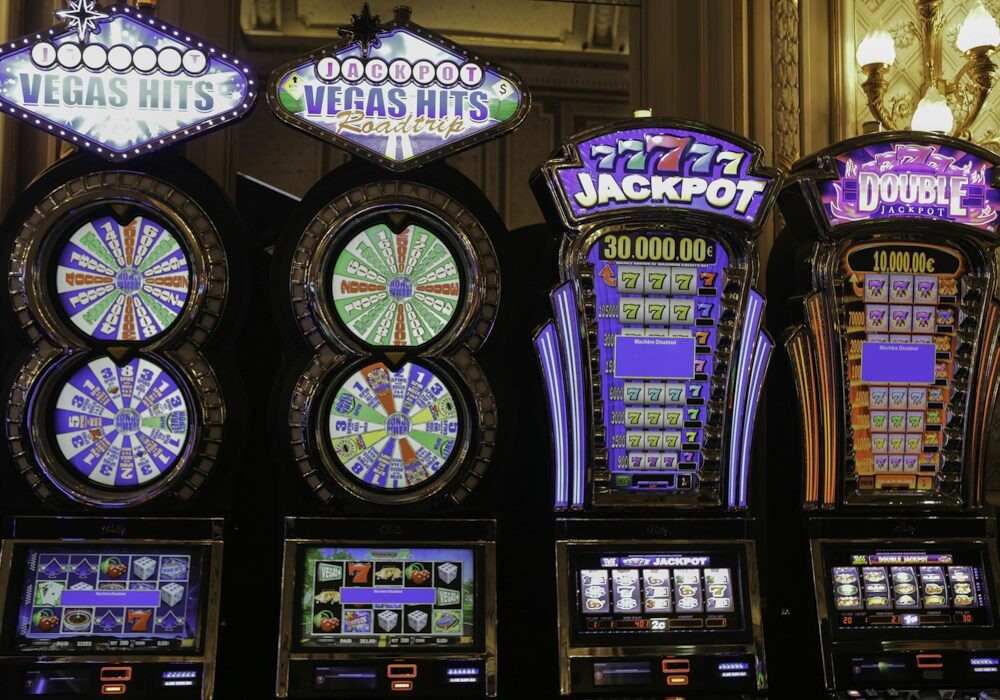
People searching how to win at slots often encounter advice about hot machines, timing tricks and guaranteed patterns. Those claims can be evaluated using basic probability. Modern regulated slot games are designed around specified payout mathematics, and no simple sequence of button presses can turn a negative-expectation game into a dependable income source.
This guide explains how slot machines work, why random-number generators matter, what return to player means and how volatility differs from the house edge. It also examines jackpot myths, demo modes and consumer-protection considerations relevant to the United States.
The purpose is educational: to clarify misleading promises and explain the limits of prediction. It does not provide instructions to increase gambling activity or suggest any casino, app or game to use.
Why ‘How to Win at Slots’ Is a Misleading Promise
The phrase how to win at slots implies that a repeatable action can determine the outcome of a random game. For properly operated slot machines, that implication is misleading. The game rules define the potential results and their probabilities; the player does not control the next symbol combination. A winning outcome can occur, but it is not evidence that a reliable winning method exists.
It is useful to distinguish understanding a slot machine from trying to beat one. Knowing what paylines, bonus rounds and published return percentages mean can help readers evaluate claims. It cannot remove the game’s mathematical disadvantage. This guide treats popular tips as claims to test, not instructions to follow.
How Slot Machines Generate Outcomes
Modern regulated electronic slots generally use a random-number generator, or RNG, to select outcomes according to the game’s programmed rules. The animation on the screen reveals a result rather than creating a predictable sequence that a person can time. Different game designs can have different symbol distributions, features and prize schedules.
An RNG does not mean every visible symbol combination has the same probability. Some virtual reels weight symbols differently, and games can contain multiple ways to trigger a feature. The relevant question is whether the implemented game follows its approved mathematics and technical standards. Readers should not infer probabilities from the appearance of a reel alone.
What Return to Player Actually Measures
Return to player, usually abbreviated RTP, is a theoretical long-run ratio between total payouts and total amounts wagered under a specified game configuration. An RTP of 96 percent means an expected return of 96 units for every 100 units wagered across a very large theoretical sample. It does not promise that an individual person will recover 96 percent of their spending.
RTP is an average, not a session guarantee. Results can differ dramatically over short periods. Some game titles may also exist in multiple RTP configurations, which is why an unverified screenshot or promotional statement should not be assumed to describe every version. The official game information and relevant regulatory approval are more meaningful than a generic internet list.
House Edge and the Cost of Repeated Play
House edge is the mathematical complement of RTP under the same assumptions. A theoretical RTP of 96 percent corresponds to a 4 percent house edge. This means the expected loss scales with the total amount wagered, not simply the amount initially deposited or placed into a machine.
For an illustrative game with a 4 percent edge, total wagers of $1,000 correspond to a theoretical average loss of $40. That figure is not a forecast for a particular session, and it does not imply the machine will pay exactly $960 back. Repeated recycling of funds through wagers increases total exposure to the house edge.
High and Low Volatility Explained
Volatility, sometimes called variance, describes how widely individual results can fluctuate. A higher-volatility game may concentrate more of its theoretical return in relatively rare outcomes. A lower-volatility game may produce a different distribution of smaller results. Neither description means the game has positive expected value.
Two games can have the same RTP but feel very different over a short observation period. That difference is a property of their payout distributions, not proof that one can be predicted. Marketing labels such as high payout or frequent wins can obscure the distinction between hit frequency, prize size and expected return.
Do Bet Size and Timing Change the Odds?
Claims that pressing a button at a particular moment, changing the stake after a loss or waiting for a machine to cool down will trigger a better outcome are not supported by the standard independent-RNG model. A change in wager size changes the amount at risk and may affect eligibility for game-specific features, but it does not establish a favorable prediction.
Some games have explicitly documented features or progressive prize rules that depend on the selected wager. Those rules should be read as part of the game’s design, not as secret timing tricks. A purported universal slot strategy that ignores the actual rules is particularly unreliable.
Hot Machines, Cold Machines and Near-Miss Illusions
A machine that has not produced a large prize recently is sometimes described as due. This is an example of the gambler’s fallacy: treating independent random events as though they must compensate for past outcomes. A machine’s previous sequence does not create a debt that the next spin must repay.
Near misses can also be psychologically powerful. Seeing two matching symbols and a third just outside the payline can feel like evidence of an approaching win, even though the display does not establish that future outcomes are becoming more favorable. Sound effects and visual celebrations should be separated from the actual net financial result.
Progressive Jackpots and Rare Outcomes
Progressive jackpots can increase as eligible activity contributes to a prize pool, but a large displayed amount is not enough to establish the probability of winning. Jackpot odds, contribution rules, eligibility conditions and any seed amount are separate elements of the game. Some progressive features operate across linked machines or networks.
A jackpot headline can distract from the frequency of ordinary losses and the rarity of the top result. Without reliable probabilities and the full paytable, calculating the expected value of a particular progressive feature is not possible. A high advertised maximum prize is not evidence of a dependable way to win.
Demo Modes and Their Limits
A demo mode may help illustrate the interface, paylines, feature descriptions and the difference between a credit display and actual cash. It does not create an edge or demonstrate how a real-money session will turn out. Demo results over a small sample are particularly vulnerable to random variation.
Readers should also verify whether a demonstration version uses the same published configuration as a regulated real-money version. A game title alone is not proof of identical settings across platforms or jurisdictions. Educational demonstrations are not substitutes for authoritative game rules and regulatory information.
Common Claims Compared With Evidence
The following table summarizes frequently repeated slot-machine myths. It is a consumer-awareness comparison rather than a list of recommended techniques.
| Claim | Evidence-based interpretation |
|---|---|
| A machine is due after a losing streak | Past independent outcomes do not make a future win more likely. |
| Stopping reels at the right moment works | Visual timing does not override the RNG result in standard regulated games. |
| A high RTP guarantees a good session | RTP is a long-run theoretical average, not an individual guarantee. |
| High volatility means higher expected profit | Volatility concerns the distribution of outcomes, not positive expectation. |
| A large jackpot makes a game profitable | Prize size alone is insufficient without the odds and complete rules. |
Licensing, Fairness and Consumer Safeguards
Online gambling authorization varies across US states. A familiar logo or an attractive game interface is not evidence that an operator is authorized in a particular jurisdiction. Regulatory bodies may publish license registers, technical standards, dispute procedures and responsible-gambling requirements. The New Jersey Division of Gaming Enforcement is one example of a state oversight authority.
Financial limits, cooling-off tools and self-exclusion mechanisms are important consumer-protection concepts. People concerned about their own gambling or someone else’s can consult the National Council on Problem Gambling for US support resources. A mathematical explanation of slots is not a recommendation to participate or to spend more money.
Frequently Asked Questions
Ques: Is there a guaranteed way to win at slots?
No. A standard random slot game cannot be made predictably profitable through timing or staking patterns.
Ques: What does 96 percent RTP mean?
It describes a theoretical long-run payout ratio under the specified game configuration, not an individual refund.
Ques: Are slot machines due after a long losing streak?
Not under an independent RNG model. Past results do not make a win owed.
Ques: Does high volatility mean better odds?
No. Volatility describes result variation and does not by itself improve expected value.
Ques: Can demo spins prove a game is fair?
No. Small samples of simulated outcomes are not a substitute for technical and regulatory evidence.
Conclusion
The most important fact behind how to win at slots claims is that randomness cannot be converted into a dependable advantage by timing, streak tracking or stake progressions. RTP, house edge and volatility describe different mathematical features, and none guarantees a favorable personal result. Large jackpots and dramatic animations can make rare events feel more attainable than they are.
A useful consumer-focused approach is to verify the published rules, recognize the limits of short samples and question any claim of a secret winning pattern. The possibility of a win does not make the game a reliable income source. This article explains probabilities and common myths; it does not endorse wagering or gambling services.
Sources: New Jersey Division of Gaming Enforcement and National Council on Problem Gambling.